This is default featured slide 1 title

Go to Blogger edit html and find these sentences.Now replace these sentences with your own descriptions.

This is default featured slide 2 title

Go to Blogger edit html and find these sentences.Now replace these sentences with your own descriptions.

This is default featured slide 3 title

Go to Blogger edit html and find these sentences.Now replace these sentences with your own descriptions.

This is default featured slide 4 title

Go to Blogger edit html and find these sentences.Now replace these sentences with your own descriptions.

This is default featured slide 5 title

Go to Blogger edit html and find these sentences.Now replace these sentences with your own descriptions.

Tuesday, January 10, 2006

Rapidly Growing Tumor

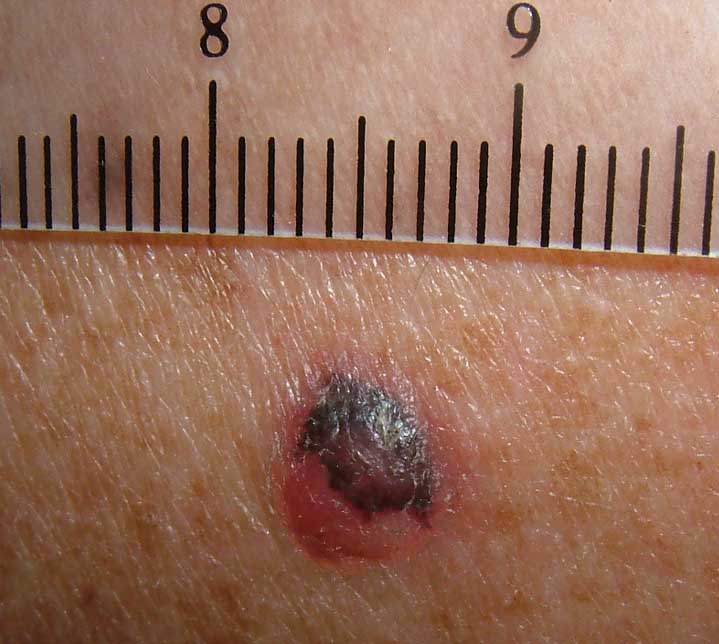
This 70 yo man presented on January 9, 2006 with a three to four month history of a lesion on his upper back. It was noticed by his wife. He has type III skin and a past history of renal cell carcinoma.
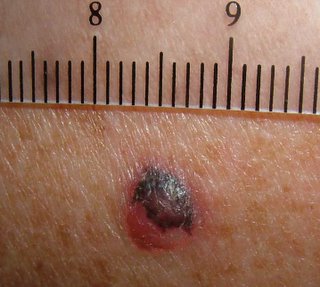


An excisional biopsy was performed.

Presumptive diagnosis is melanoma, probably nodular type.
Pigmented basal cell is another possibility, but rapid growth favors melanoma.
I do not think metastatic renal cell carcinoma would be pigmented.

January 25, 2006 -- Update
The biopsy showed a superficial spreading melanoma, 2.04 mm thick, Level IV.
The patient underwent a wide local excision with 2 cm margins. He elected not to have sentinal node biopsy.
Sunday, January 8, 2006

Suggestions for Wart Removal?

Dear Anak VGRD Members,

I am a G.P. trainee and have been having a hard time with a wart removal on a 3 year old's fifth toe. The difficulty is getting him to let anyone near it. I've seen him once, late in the day, and my preceptor asked that the child return for freezing with the help of sedation. We are now working on what to use. I prefer to avoid having to sedate the child, and have suggested duct tape in the interim (six days on, one day off with soaking). What suggestions or tricks would you have for treating a wart in this location in a three year-old? Thank you, Tammy Grimely, Hobart, Tasmania

Wednesday, January 4, 2006

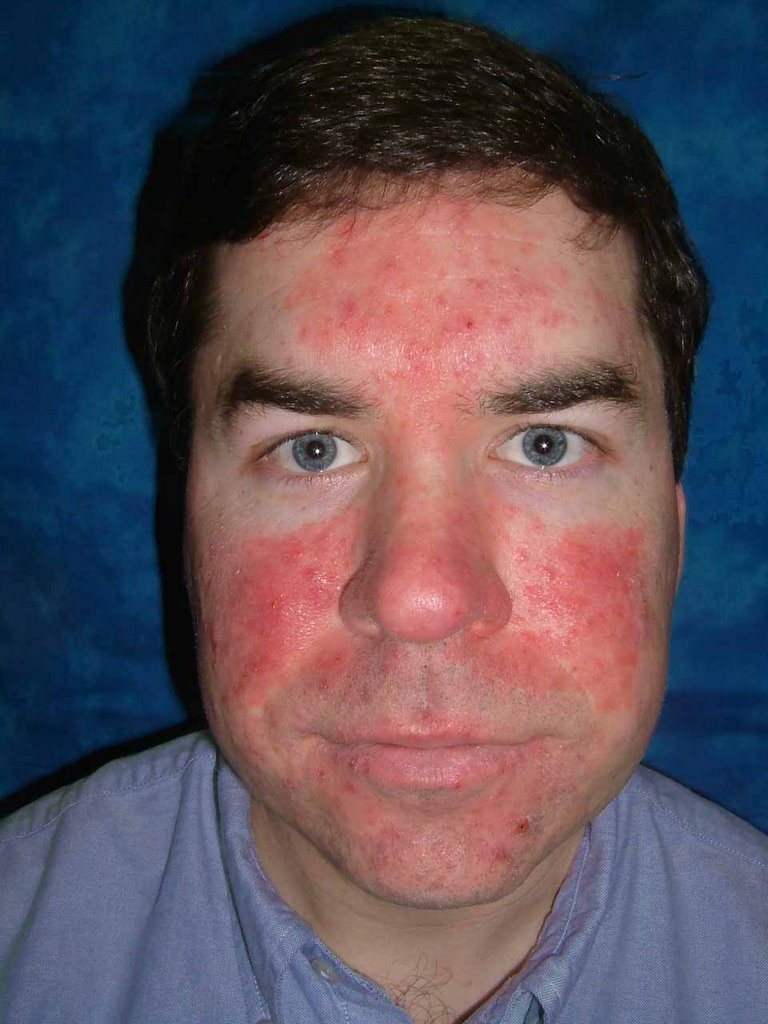
Explosive Rosacea?

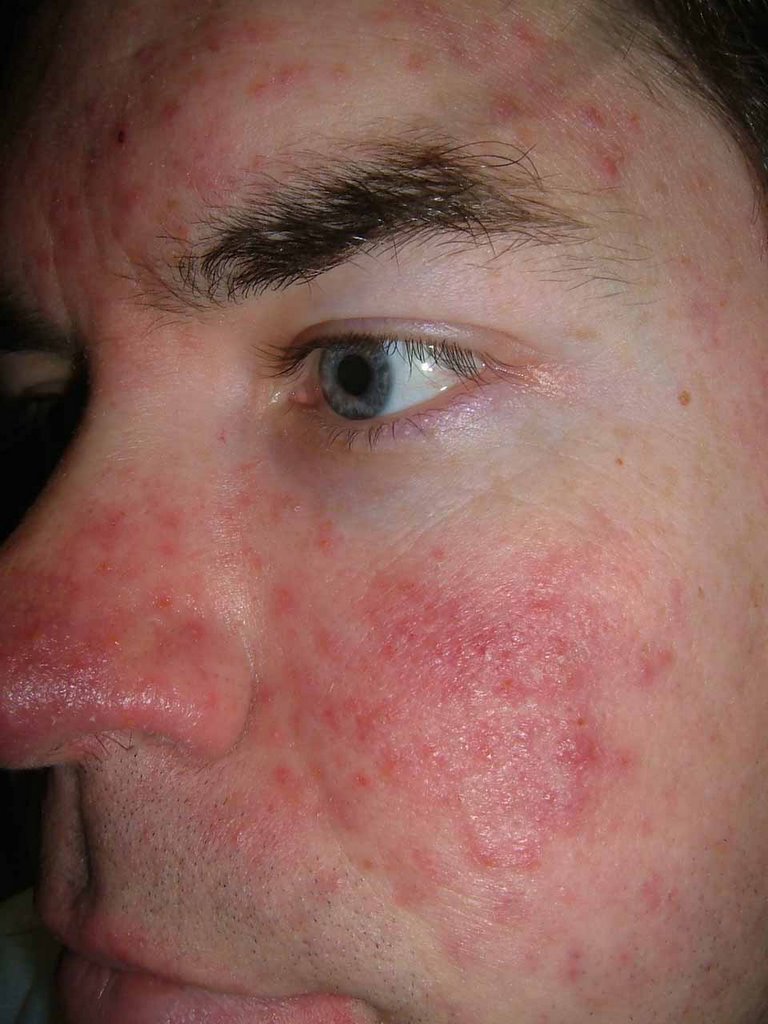
The patient is a 33 year-old executive V.P. who presents with a 6 month history of dramatic facial eruption. He had acne as a teenager but has been clear for many years. His health is good and he takes no medication by mouth. He has never used topical corticosteroids for his face.


The examination shows erythematous papules and small cysts on forehead, cheeks and chin. There are a few papules on the back, but the chest is clear.


Diagnosis: Florid Rosaca

Plan:
I will place on prednisone 20 mg bid for a week or so and isotretinoin 0.25 mg per kg for a cple of weeks and then increase to 0.5 mg per kg fir a month or two. Slowly incvrease isotretinolin to 1 mg per kg over 8 weeks and anticipate a six moth course. The prednisone will be tapered over a month to 6 weeks to avoid a flare.

I could have started with doxycycline; but isotretinoin may be more definitive; I welcom your thoughts.

Thank you,

David

Tuesday, December 27, 2005

Leg Ulcer in a Heart Transplant Patient

The patient is a 49 yo man with a one month history of a very painful leg ulcer.
He is 8 years s/p heart transplant.
His medications include: CsA, CellCept, Pred, Diltiazem, Ranitidine.
There was no history of trauma and no similar ulcers in the past. He works at a supermarket and is on his feet all day long at work.
This ulcer is periodically painful. He has had leg edema for over a year.

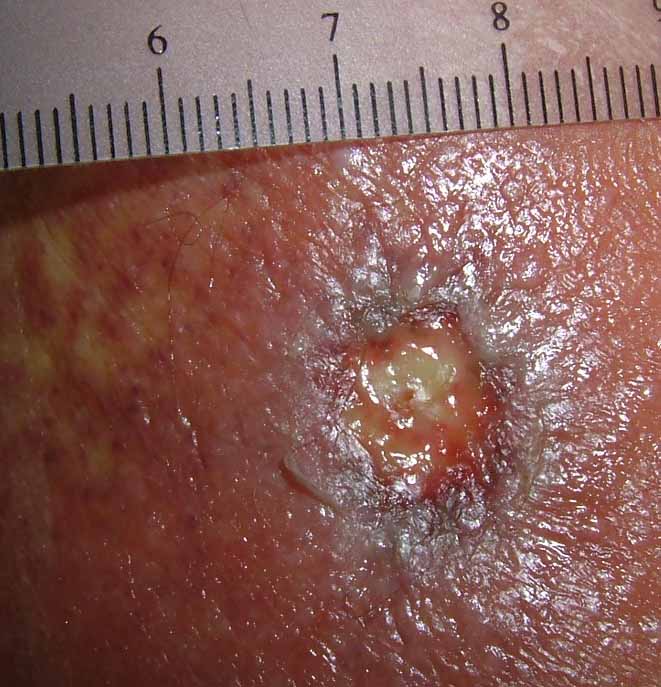
The examination shows an 8 mm in diameter ulcer with as slightly purulent surface and ragged edges.. The borders are grayish. The area surrounding the ulcer has 2+ pitting edema and is erythematous.


Bacterial culture shows only staph species
Peripheral pulses are present but weak.

No response to support stocking used for the past three weeks.

This is probably a venous ulcer, but it's a bit unusual for a 49 yo man. Diltiazem can cause edema.
The pain is out of proportion to what one would expect. I have known the patient for six years and he has not had pain like this before.

Please help with diagnostic and therapeutic suggestions.

Sunday, December 18, 2005

Retroauricular Dermatitis

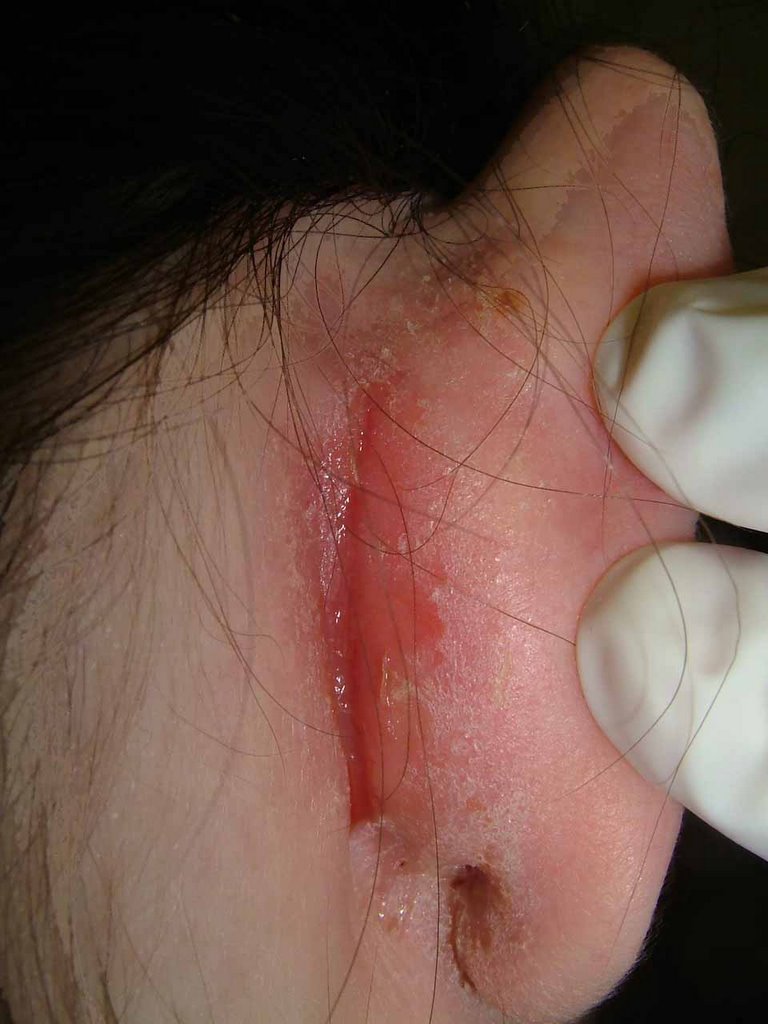
The patient is a 25 year old registered nurse with a few month history of a painful and pruritic process in the right retroauricular area. She also has mild scalp pruritus and some increased scaling of the scalp.

The exam shows a superficial erosion in the right retroauricular sulcus.


Bacterial Culture: Positive for Many Staph aureus - resistant to Pen and Erythro

Pt. Started on mupirocin cream

Note: She is an obstetrical nurse and has contact with newborns. Her staph infection is of potential import here.

Reference:
Marks MB, Gluck JC, Lavi E, Halem-Sinclair E.
J Am Acad Dermatol. 1981 May;4(5):519-22
An unsuspected sign of cutaneous allergy.
An eczematous eruption in the superior retroauricular areas of the scalp and often on the posterior aspects of the pinnas may be seen in about 30% of allergic children. The eruption is not generally noticed because the overhanging hair covers the affected areas. The dermatitis is seen mainly in those children afflicted with bronchial asthma, perennial allergic rhinitis, or both. A previous history of atopic or seborrheic dermatitis is, as a rule, not elicited.

Tuesday, December 6, 2005

Periocular Dermatitis

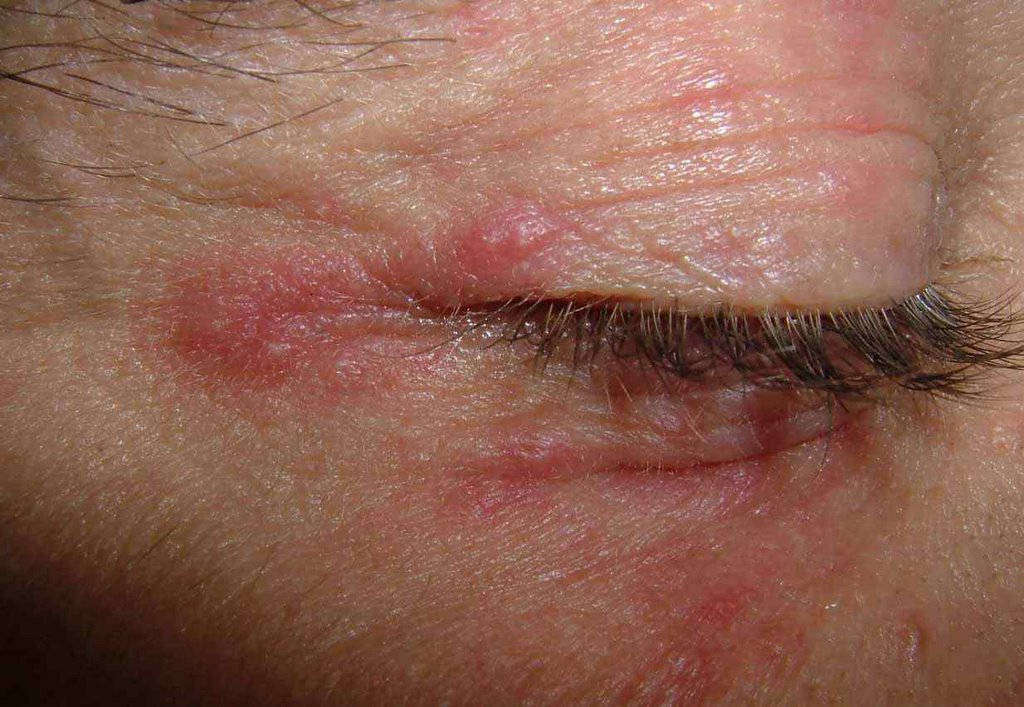
The patient is a 35 year old man who has had a right-sided eyelid dermatitis for around eight months. He was given a moderate strength topical steroid for this by his primary care physician and has been using it off and on since. When the process flares, he applies it again.

There are discrete erythematous papules around the upper and lower lids on the right side. The left eyelids are clear.

The clinical picture suggests a steroid-induced periocular acne.
Treatment: cold tap water compresses, doxycycline 100 mg. bid. Is there a role for tacrolimus ointment?

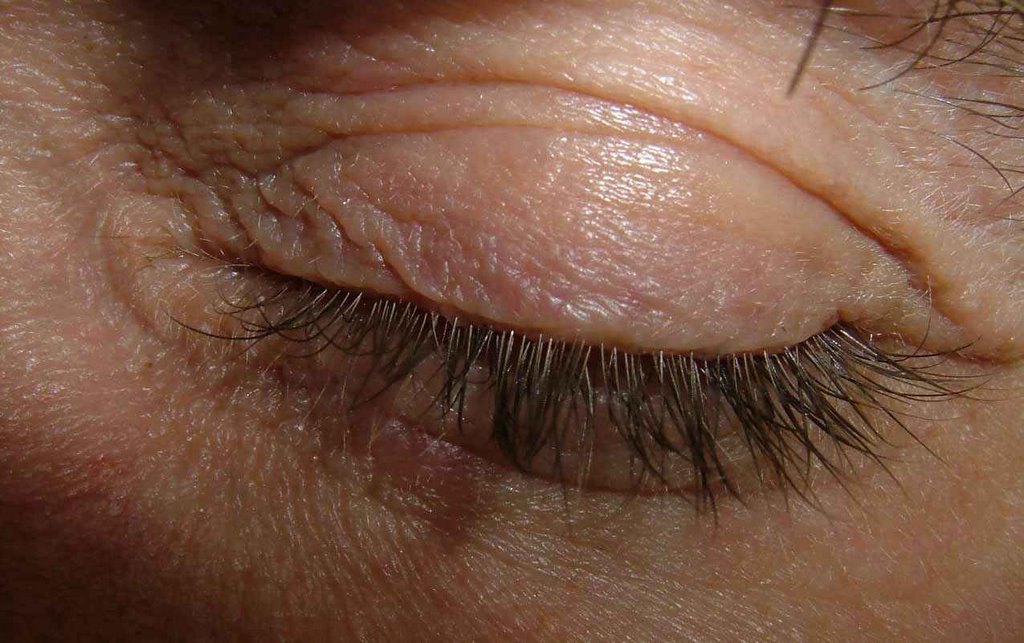
Affected Right Eye


Normal Left Eye


References:
1.
J Am Acad Dermatol. 1999 Sep;41(3 Pt 1):435-42.
Eyelid dermatitis to red face syndrome to cure: clinical experience in 100
cases.
Rapaport MJ, Rapaport V.

A retrospective review of all eyelid dermatitis patients seen over an 18-year
period revealed a large subgroup of patients who had, as the basis for their
ongoing problem, an addiction to the use of topical or systemic corticosteroids.
This group of 100 patients often sought many consultations with various
physicians. Unrelenting eyelid or facial dermatitis often resulted in the use of
increasing amounts of corticosteroids for longer periods of time. Soon the skin
became addicted. Once the work-up ruled out other causes, the remedy for the
problem was absolute total cessation of corticosteroid usage. This article
describes the typical history of the problem, the evaluation of these patients,
and the distinctive pattern of flaring erythema that ensued when the
corticosteroids were ceased. We stress the absolute necessity of total cessation
of corticosteroid use as the only treatment for corticosteroid addiction. We
also demonstrate that no additional therapy or further consultations were
necessary once remission was obtained after topical corticosteroid abuse was
stopped.

2.
West J Med. 2001 Jun;174(6):383-4.
"Tortured tube" sign.
Fowler KP, Elpern DJ.
Medical University of South Carolina Charleston, SC. Williamstown, MA, USA.
(This is available as full text - go to http://www.pubmed.gov find this article and you can see the full text version. This was a patient Dr. Fowler saw in my office 5 years ago.)

A Hunter in Deer Season

The Hunter as Hunted

[Your comments are welcomed]

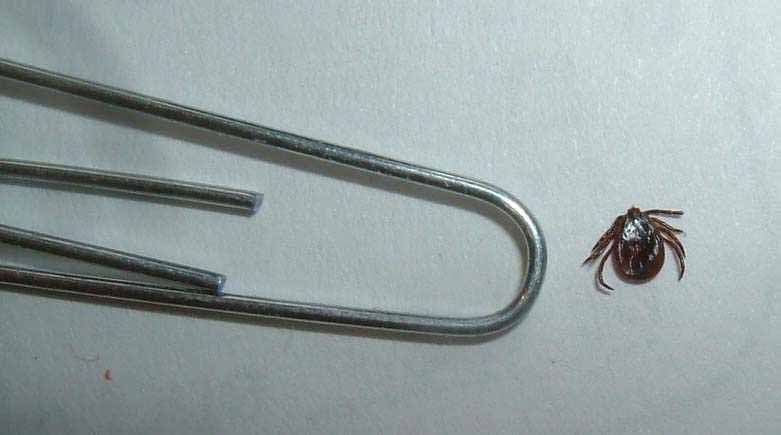
This 72 year old man was deer hunting on December 2, 2006. He remembers sitting on a log for 45 minutes and feeling as if he was being bitten. Later that day, his hunting companion removed three ticks from him. He presented on Monday, December 5 for an evaluation. The picture is taken from his left hip. The tick was gently removed and photographed with a paper clip.


Since the tick was attached for around three days, I elected to treat the patient with doxycycline 100 mg. bid for 10 days. The tick was sent to the lab for identification. I may get serologies in a few weeks. ADDENDUM: The tick was identified as a deer tick, Ioxides dammini.

Rationale for Treatment (from www.emedicine.com)
Ten days of doxycycline seem innocuous enough.
Although most patients do not require treatment, consider tick bite prophylaxis on a case-by-case basis. Base the decision on the species of the tick, duration of attachment (degree of engorgement of the tick is a surrogate marker), geography (percentage of ticks infected where the bite took place), method of tick removal, anxiety level of patient, and pregnancy (lower threshold to treat pregnant women).
After performing this exercise in clinical decision-making, one may decide to treat a given patient with prophylactic antibiotics. In the studies mentioned previously, no patient in the treatment group (which received 10 d of antibiotic treatment) had the disease. Historically, if one were to choose to treat, 10 days of oral amoxicillin, doxycycline, or cefuroxime axetil would seem prudent, depending on patient factors such as age, allergy, and pregnancy.
In one of the most recent studies (2001), a single 200-mg dose of doxycycline was used for prophylaxis with excellent results.